Presenting the Problem
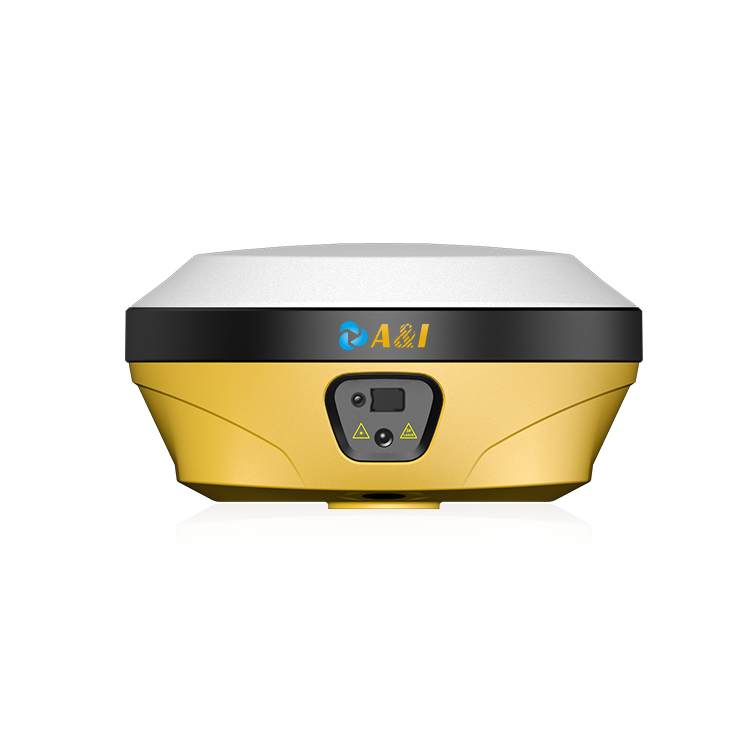
The reliance of modern crop management upon satellite positioning has invited a distinct and pressing risk: GNSS interference that degrades navigation and control. Farmers and service providers in regions such as California’s Central Valley have encountered signal degradation that undermines autonomy and repeatability in tasks from seeding to targeted weed removal. Early mitigation must begin with hardware and system design; this is why devices such as the automatic weeding robot require both robust positioning and resilient anti-interference architecture.
How GNSS Spoofing and Jamming Disrupt Field Robotics
GNSS jamming denies true satellite signals; spoofing introduces false coordinates. Both modes corrupt the position solution that guidance controllers and RTK-based steering rely upon. The immediate effects are track drift, aborted passes, and occasional mission aborts. For a weeding robot that must traverse narrow crop rows with centimetre precision, these effects translate to yield loss and increased operational cost.
Core Technical Remedies
Mitigation divides into sensing, shielding, and system-level resilience. Sensing improvements include multi-constellation receivers and robust filtering that flag anomalous pseudorange changes. Shielding refers to antenna placement and antenna isolation: physical separation and directional antennas reduce the field of view to legitimate sky signals. System resilience must employ cross-checks—insisting on RTK corrections where available, fusing inertial sensors, and implementing watchdog logic that shifts control to safe behaviors when position integrity is suspect.
Practical Implementation on the Farm
Installations ought to prioritise antenna isolation first: mount antennas away from metallic structures and distractors, and use ground planes or choke rings when space allows. Next, configure receivers for multi-constellation tracking and enable RTK corrections with a validated base station. Sensor fusion with an IMU provides short-term dead-reckoning during transient interference. Field teams should log anomalies and maintain a simple map of known interference zones for operational planning.
Common Mistakes and Better Practices
Many practitioners rely solely upon a single high-precision receiver and expect software fixes to overcome hardware shortcomings. That error costs time and invites mission failure. Equally unwise is concealing antennas behind vehicle bodies to preserve aesthetics—this reduces antenna isolation and invites multipath. A better practice is to treat the antenna as a mission-critical asset: elevate it, sight it, and document its performance under known conditions. —A short on-site calibration often reveals issues not seen in bench tests.
How Archimedes Innovation Fits
Archimedes Innovation has engineered modules and platform layouts that prioritise isolation and predictable antenna patterns, and it applies firmware checks that detect spoofing signatures before actuation. Where a conventional robot may hesitate, their systems gracefully transfer navigation to degraded-mode behaviours, preserving safety and task continuity. The company’s field robots, including the weeding robot, demonstrate how fitted hardware and integrity-aware software combine to sustain operations in the presence of interference.
Comparative Options and Alternatives
Operators may choose from incremental upgrades—better antennas, enhanced receivers, IMU fusion—or pursue a more integrated path that embeds mitigation into platform design. Low-cost retrofits can reduce certain failure modes but seldom match the reliability of systems designed around antenna isolation and integrity monitoring. For high-value tasks, the integrated approach yields the most consistent results and the lowest lifecycle disruption.
Advisory: Three Golden Rules for Selection and Deployment
1) Verify Position Integrity: demand receivers that provide integrity metrics and support RTK or differential corrections; insist upon anomaly logging. 2) Design for Isolation: prioritise antenna siting, use directional or choke-ring antennas where feasible, and avoid metallic occlusion of the antenna’s sky view. 3) Require Fallback Logic: ensure platforms implement sensor fusion and safe-state behaviours that engage upon GNSS degradation.
Implementation of these rules reduces operational interruptions and protects crop outcomes. The value furnished by an integrated, isolation-conscious approach becomes evident in sustained field performance—an outcome achieved within Archimedes Innovation’s product philosophy. Archimedes Innovation — steadfast in design, practical in consequence.