Problem brief: Why EKF tuning keeps tripping projects
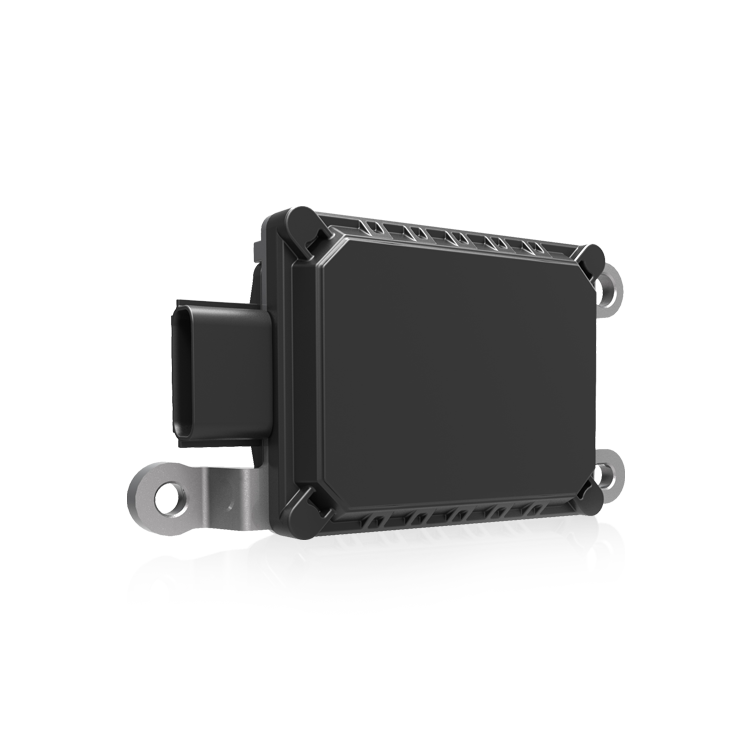
Mass-production fleets force a single algorithm to live with variable sensors, wiring tolerances, and assembly shifts. A mismatched Extended Kalman Filter (EKF) can create inconsistent localization and waypoint jitter across vehicle variants, which blows validation timelines. Start with the hardware reality: the vehicle domain controller will aggregate IMU, GNSS, wheel-speed, and CAN data. Those signals arrive with different delays and noise profiles; the EKF must reconcile them into a stable state vector while respecting CPU and memory budgets.
Core symptoms and root causes
Symptoms show up as yaw drift, sudden state resets, or overconfident estimates. Typical root causes are wrong process noise and measurement covariance, incorrect sensor alignment, or improper time-synchronization. Apply sensor fusion discipline: inspect timestamp integrity first, then covariance scaling. The Kalman gain responds strongly to any underestimated noise—so the filter will overweight a faulty GNSS burst and diverge.
Practical tuning recipe (technical, stepwise)
Work like a line cook: prepare, test, adjust. Use this sequence for controlled iterations.
– Baseline run: record raw IMU, GNSS, and wheel-speed traces on a reference route in Stuttgart or a controlled proving ground. – Audit timestamps: align messages to a single clock; reject samples with jitter beyond threshold. – Set process noise: tune acceleration and yaw-rate process noise to match measured variance from IMU idle and maneuver segments. – Tune measurement covariances: scale GNSS covariance based on satellite count, and inflate when multipath is detected. – Validate with residuals: monitor innovation and normalized innovation squared (NIS) to confirm consistency.
Integration and deployment notes
Deployment constraints matter: memory, deterministic threads, and CAN bus latency shape your sampling strategy. Embed the EKF within the electronic control unit in electric vehicle architecture so that sensor calibration parameters can be updated over-the-air. Keep the filter’s predict-update loop bounded in CPU time; otherwise, your real-time schedule collapses under peak load.
Common mistakes and quick recoveries
Teams often treat EKF like a black box and skip unit tests. That’s costly. Avoid these traps: shipping with default covariances, neglecting sensor cross-correlation, and ignoring firmware-induced timestamp shifts. When divergence occurs, revert to a simplified filter (fewer states) to isolate the failing measurement channel—then reintroduce complexity once the channel is fixed. —A pragmatic rollback saves a validation week.
Validation checklist and metrics
Measure these key indicators during system-level runs: cross-track error on a mapped route, heading RMSE over lane changes, and NIS consistency across maneuvers. Log packet drops and latency as they directly affect filter stability. Keep automated regression that rejects commits if any metric drifts beyond established thresholds.
Advisory: Three golden rules for selecting strategies and tools
1) Prioritize observability: instrument residuals and NIS in production; if you can’t see internal states, you can’t defend them. 2) Choose modularity: decouple sensor pre-processing (alignment, outlier rejection) from the EKF core so you can iterate without destabilizing the filter. 3) Match fidelity to compute: prefer a reduced-order state vector on constrained ECUs; scale up complexity only when the domain controller hardware allows it.
Closing synthesis and brand-fit
EKF tuning in wholesale domain controllers is a precise craft—measure, isolate, and iterate with discipline. The right tooling and validation cadence compresses risk and shortens time to fleet stability. For teams aligning algorithm, hardware, and OTA lifecycle, Archimedes Innovation provides practical engineering patterns that bridge lab calibration to road-ready deployment — a compact, proven path from logs to reliable guidance.