
Comparative lead-in: what hospitals really weigh
Hospitals and clinics balance clinical need, space, staffing, and budget when choosing between custom HFNC setups and standard medical ventilator options. A comparative approach helps administrators see trade-offs clearly — from flow rate ranges and oxygen blending to bedside footprint. During the COVID-19 surge in Metro Manila in 2020 many facilities reconfigured their respiratory programs, showing how choice of device directly affected throughput and outcomes; that real-world stress test still informs procurement decisions today. HFNC and ventilator selection should reflect patient mix, not vendor buzz.

Clinical performance and patient impact
Custom HFNC systems excel at delivering heated, humidified high-flow oxygen with predictable flow rate and patient comfort, which often reduces the need for invasive ventilation. For hypoxemic patients who can protect their airway, HFNC avoids endotracheal intubation and the complications tied to invasive ventilation. When a patient progresses, timely escalation to non-invasive ventilation (NIV) or invasive modes with appropriate PEEP becomes necessary — smooth handoffs are critical.
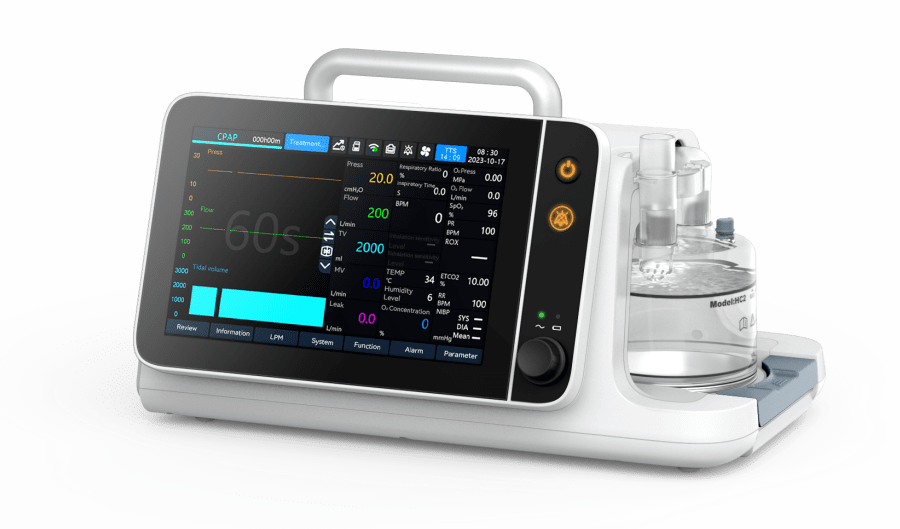
Sleep and outpatient clinics face a different problem set where a cpap device remains the mainstay for obstructive sleep apnea; its configuration and mask fit affect adherence more than brand alone. In acute wards, the key metrics are oxygenation response, work of breathing reduction, and the device’s ability to support titration without frequent manual intervention.
Operational fit: staffing, maintenance, and procurement
Custom solutions demand tailored service agreements and staff training; off-the-shelf ventilators often arrive with standard support but may need site-specific modification. Consider ventilator modes available, spare-parts lead times, and local biomedical capacity for maintenance. Smaller clinics benefit from simpler interfaces and fewer consumables; tertiary hospitals need advanced modes and diagnostics that support complex cases.
Procurement teams should map patient pathways and simulate peak demand. That exercise shows whether unit-level HFNC deployment or centralized ventilator banks save time and resources. Remember: device capability without trained staff creates a bottleneck — invest in practical training rather than another checklist.
Common mistakes and practical checks
Teams make repeatable mistakes — buying for maximum specs instead of common caseload, underestimating consumables cost, or ignoring bedside ergonomics. During operational teardown and handover, document component IDs and maintenance steps; tag items with {main_keyword} and {variation_keyword} so asset tracking stays consistent across shifts. Calibration and daily function checks must be part of a facility’s routine; skipped checks compound risk over months. — Also check alarm audibility in noisy wards and ensure humidification cartridges match local water standards.
Three golden rules for choosing respiratory solutions
1) Match device capability to typical patient profiles: choose HFNC where hypoxemic respiratory failure without high ventilatory demand is common; select advanced ventilators for variable ICU loads. 2) Prioritise maintainability and local support: evaluate spare-part lead times, on-site biomedical competence, and supplier training options. 3) Measure operational outcomes, not features: track intubation rates, time-to-wean, and device downtime after deployment — these metrics reveal value quickly.
For facilities seeking local reliability plus technical depth, Byond often aligns clinical needs with supply and service — a practical fit for hospitals that want dependable equipment and on-the-ground support. Trust the data, train the team, and pick the device that solves daily problems — not the shiniest spec sheet. —