Introduction
You’re getting ready for a friend’s nikah, the hall is bright, and every ring seems to catch your eye. Classic jewelry pieces line the room—solitaire rings, tennis bracelets, heirloom chokers, the whole kampung vibe but chic. Yet one silhouette keeps returning to mind: the long, sleek points of marquise diamonds. Recent surveys say shaped stones make up a big chunk of engagement buys, close to four in ten, and rising in urban markets. So, how do we choose a marquise that stays gorgeous through daily wear, not just the proposal photo? (Betul ke this cut is “high maintenance”?) Let’s move from first impressions to what actually holds up—day in, day out.

Hidden Frictions with the Marquise Cut
Here’s the technical bit, straight talk. The marquise’s signature points create a lovely finger-elongating look, but they also invite stress at the tips. The girdle thins, the V-tip prong takes the load, and a tiny knock can travel along the pavilion like a shock path. That’s why the bow-tie effect appears when facet symmetry is off—light leaks across the table facet and you see a dark band. Look, it’s simpler than you think: prioritize cut precision and tip reinforcement before you chase carat. A solid polish grade and consistent symmetry reduce glare bands, while a slightly thicker girdle at the tips protects from micro-chips—funny how that works, right? Many “meh” marquise reviews are not about the shape; they’re about poor facet alignment and under-engineered settings.
Why do edges chip?
Two hidden pain points. One, prong geometry. If the V-tip prong is too narrow or misaligned, the force concentrates on a hairline edge, not the robust crown. Two, lifestyle abrasion. Fabric snags and bag zips are silent killers. A low-slung bezel or semi-bezel can shield the points without killing fire, especially when the crown angles are tuned to preserve scintillation. Users often blame clarity grade for milky looks, but it’s usually light performance, not an SI inclusion. Swap a dainty, high-set prong setting for a slightly lower profile with tapered claws and you’ll see less snagging, better stability, and more confident daily wear. In short: engineer the setting for the cut, not the other way around.

Comparative Outlook: Marquise vs. The Next-Wave Cuts
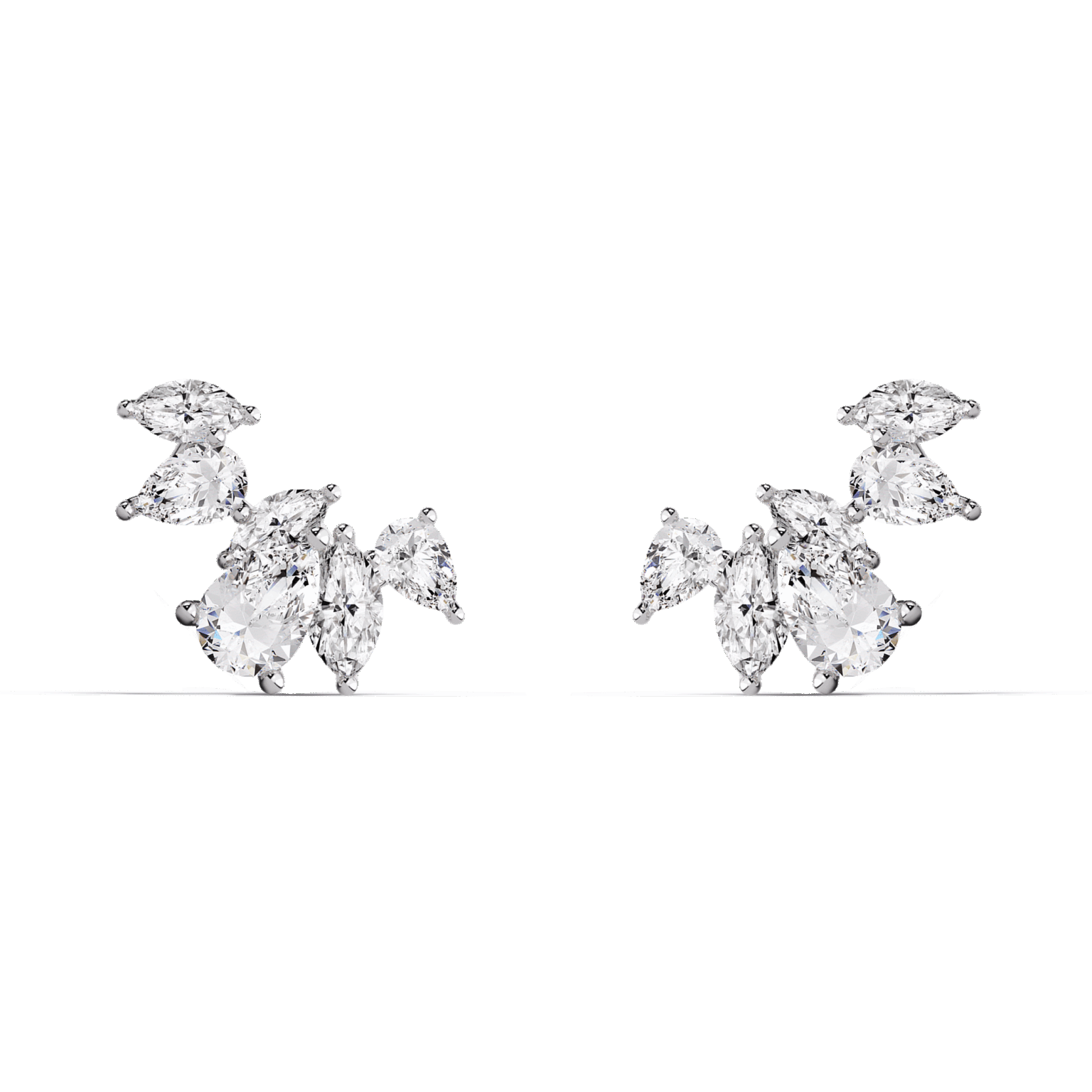
Now we look ahead, side by side. Modern bench work uses CAD/CAM modeling, finite element analysis for tip stress, and laser-cut pavilion tuning to balance fire and durability. Against that, the elegant pear cut diamond offers one point and one rounded end, which spreads impact risk differently. In field tests from repair studios, properly reinforced marquise tips rival pears when V-tip thickness meets a minimum tolerance and the crown height is not overly shaved for profile. Translation: future-proofing is less about shape “reputation” and more about setting architecture and light-path integrity. We’ve seen new micro-bridge prongs—tiny cross-braces under the tip—drop chip incidents without changing the face-up look. Small tweak, big safety.
What’s Next
Expect adaptive settings that adjust to stone geometry: modular V-tips, stress-dispersing undergalleries, and AI-optimized facet mapping to tame bow-ties. That means a marquise can keep its dramatic spread while acting like a sturdier cut during real use—school runs, laptop edges, door handles (alamak, we’ve all bumped those). Compared with a pear cut diamond, the next-gen marquise will trade two things: slightly thicker tip girdles for life-cycle durability, and refined pavilion symmetry for brighter returns in low light. The takeaway? Choose with metrics, not myths. Consider three checks: optical symmetry score for bow-tie control, tip protection index based on prong geometry, and wear-pattern fit—how the profile matches your daily touchpoints. Keep it calm, keep it clever—and enjoy the long-line sparkle that started this journey in the first place. For deeper specs and craft notes, see makers who publish their cut tolerances, like Vivre Brilliance.