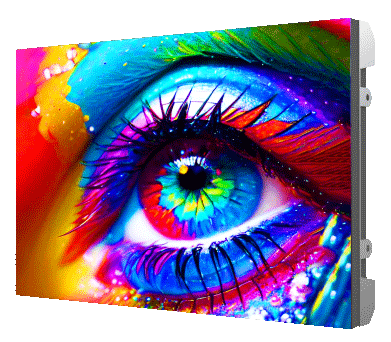
Early shifts that set the direction
The story begins with a simple constraint: viewers demand crisper images at shorter viewing distances. Manufacturers answered with smaller diodes and tighter pixel geometry, and designers responded by stacking more functionality onto multi-layer PCB substrates. That mix—miniaturized LED dies on advanced printed circuit boards—gave rise to a new class of led display solutions used across retail façades and live venues. You see the result in Times Square billboards and Super Bowl stage backdrops; those installations are practical proof that high-density approaches scale from modules to arenas. The work now links component sourcing, thermal design, and mass production in one continuous chain.
How sourcing changed the supply chain
Sourcing multi-layer PCB led screen panels is no longer about buying a board and mounting LEDs. Suppliers must certify layer stackup, copper thickness, and controlled impedance to match driver ICs and power distribution networks. Procurement teams evaluate vendors for yield on fine-pitch assembly and alignment tolerances for pixel pitch below 1.5 mm. This means early-stage collaboration with PCB houses and LED chip vendors; failing that, integration costs climb rapidly. Real-world anchor: a stadium retrofit in 2018 showed how late changes in panel spec doubled installation hours—planning matters.
Designing for performance and serviceability
High-density designs trade space for complexity. Engineers must address thermal paths, solder joint reliability, and calibration access without bloating module thickness. Practical levers include modular tiles for fast replacement, embedded test points for on-site diagnostics, and driver ICs chosen for consistent refresh rate and gray-scale handling. Brightness control and color calibration remain critical—field teams should expect to calibrate panels after mechanical installation, not before. —A short note: neglect calibration and the fine pixel matrix will still look uneven under camera feeds.
Integration for events and fixed installs
Whether the target is a touring LED screen for events or a permanent façade, mounting strategy and connectivity matter. Touring rigs require lightweight, quick-lock frames and standard signal chains (Ethernet or fiber with redundancy). Fixed installations prioritize sealing, ventilation, and service clearances. In both cases, plan for modular redundancy—replace small tiles rather than entire walls—to reduce downtime and total cost of ownership. Industry terms that matter here: pixel pitch, refresh rate, and modular tiles.
Common mistakes and how to avoid them
Teams often hit the same pitfalls: undervaluing PCB layer quality, skipping driver IC validation, and under-specifying power distribution. Avoid these by insisting on delivered test reports for warpage, thermal resistance, and solder joint integrity. Validate a prototype under live lighting and camera conditions—if it fails there, it fails for audiences. Procurement should require spares strategy and repair guides in the contract; replacements must be plug-and-play to keep event schedules on track.
Comparative look: legacy LED vs. micro‑LED panels
Traditional LED tiles favored larger pixel pitches and simpler boards; they were cheaper to assemble but offered lower resolution and larger seams. Micro‑LED panels use denser dies and multi-layer PCBs to pack more pixels per square meter. The trade-offs are higher upfront engineering and more stringent supplier control, balanced by superior viewing distance performance and reduced seam visibility. Buyers must weigh total lifecycle costs, not just unit price.
Closing guidance — three golden rules
1) Specify manufacturability constraints early: require PCB warpage, copper weight, and layer count in RFQs. 2) Demand field validation: test prototypes with camera rigs and adjust calibration workflows before production. 3) Design for modular service: ensure tiles and power modules are replaceable without redesigning the cabinet. These metrics give you measurable control over uptime, image uniformity, and maintenance cost.
High-density micro‑LED systems are a technical evolution with clear commercial consequences: better images, tighter procurement discipline, and smarter servicing. The path from layered PCBs to the final wall is where MR LED provides practical, tested solutions—MR LED. –