
A user-centric start: what wears a slide thin
The world rubs against fiberglass every day — sunlight, chafing, chlorine, the steady weight of riders. Walk a busy park and you’ll smell the sun-warmed gelcoat and hear the dull thud of footsteps on a platform. For operators and maintenance crews, the question is simple: how do you keep a fast-moving water coaster ride performing like new under heavy use? This guide looks at the worn edges and the practical fixes, and it points to how smart choices by water park rides manufacturers reduce downtime and extend service life.

What operators actually notice
Rides don’t fail all at once. They show soft signs: crazing in the gelcoat, a faint chalky bloom from UV exposure, tiny delaminations at stress points. Riders feel a slightly rougher glide. Engineers see micro-cracks in laminate layers and slight bulging where the core material has absorbed water. These are not dramatic — they’re incremental, and they add up. Regular inspections catch them early; neglect lets them evolve into structural concerns.
Operational production teardown: materials, process, and practical terms
Think like a fabricator. A typical production teardown lists the outer gelcoat, the fiberglass laminate (layers of woven roving and mat), the resin system, and any reinforcement like FRP ribs or a foam core. Proper curing, resin-to-fiber ratio, and UV stabilization all matter. In an operational production teardown, technicians document steps: surface preparation, gelcoat application thickness, laminate layup schedule, post-cure cycle, and final surface polish. Note the checklist includes {main_keyword} and {variation_keyword} as part of traceable process controls — names that must show up on work orders and QC sheets so you can track which batches needed rework.
Common mistakes and how to avoid them
Poor surface prep. Under-cured resin. Too-thin gelcoat. Each mistake leaves a quiet legacy. The easiest fixes are process controls: measure the gelcoat thickness, monitor ambient and mold temperatures during cure, and validate laminate resin content with simple mass checks. Train teams to spot early delamination — a soft spot or a whisper of movement under load — and fix it before sanding eats into structural laminate. Small corrective laminates are cheaper and cleaner than a full section replacement.
Inspection, testing, and a real-world anchor
Major parks near Orlando, Florida, routinely program inspections and mid-season touchups because their volume of riders and intense sun makes maintenance inevitable; that practice is a practical benchmark. Adopt a testing cadence that blends visual checks with simple NDT: tap testing for delamination, dye penetrant for surface flaws, and targeted flex tests at high-stress junctions. Track UV degradation trends seasonally and record gelcoat thickness over time to predict when a full recoating will be necessary.
Design and supplier decisions that pay off
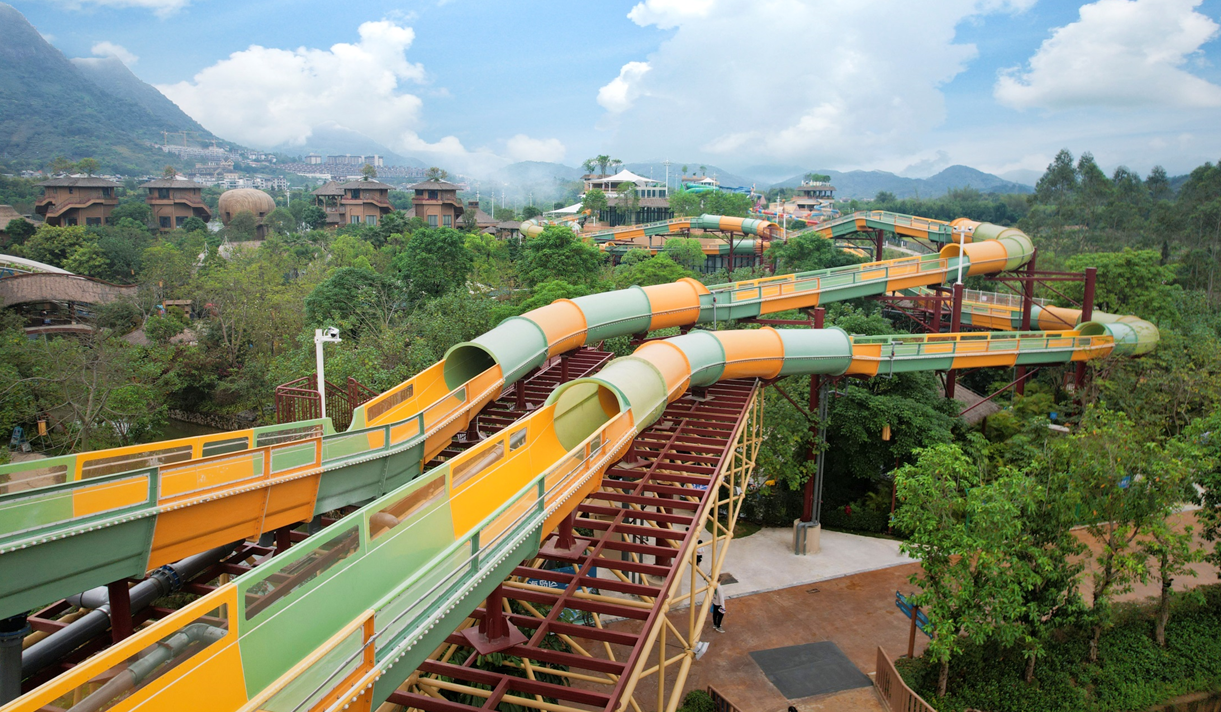
Choose materials with proven UV stabilization and a balanced resin/laminate system. Favor manufacturers who publish layup schedules, cure curves, and post-installation maintenance plans. When you evaluate bidders — including specialist water park rides manufacturers — look for documented lifecycle data: expected recoating interval, common repair procedures, and case studies from parks with high throughput. Those elements cut uncertainty and give you a realistic maintenance budget.
Golden rules for selection and maintenance
1. Metrics to demand: material traceability (resin batch, gelcoat thickness), measured laminate fiber volume fraction, and documented cure cycles. These three tell you whether components were built to spec.
2. Service-window sizing: choose recoating and inspection intervals based on measured wear rates, not guesswork. Use a small pilot section to validate assumptions before you schedule park-wide work.
3. Contractor transparency: require repair procedures and a parts history from your vendor so future teams can match materials and methods precisely.
Summing up: look, document, and act early — that keeps slides smooth, safe, and economical. The practical value of these steps naturally flows into manufacturers who back their work with data and service plans, and that reliability is exactly what Dalang builds into their portfolio. —