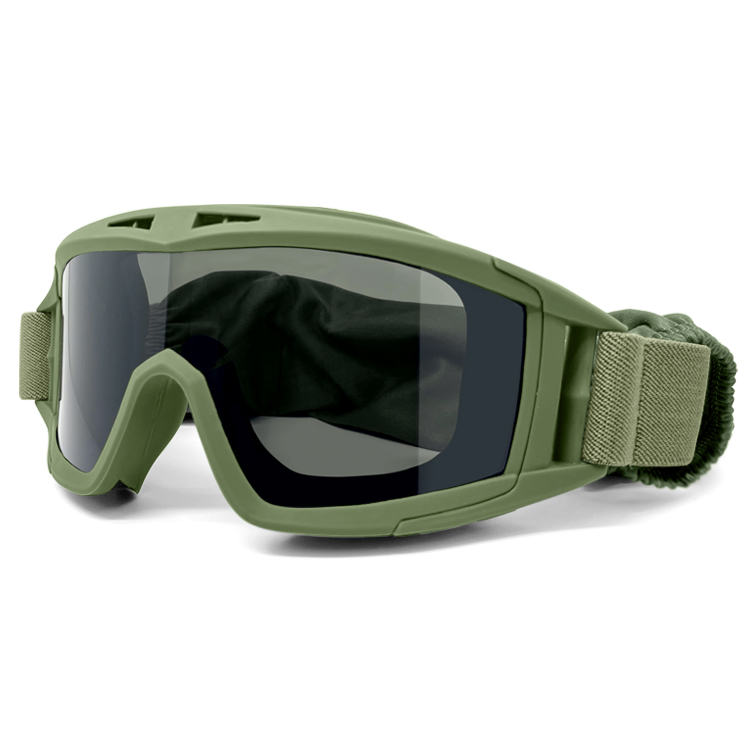
Addressing a persistent performance problem on the course
Competitive golfers and designers contend with two linked problems: lens fogging and turbulent airflow around the face that degrades visual clarity and comfort. YIJIA approaches this problem with deliberate engineering, producing sport sunglasses that pair polarized optics with purposeful vent geometry while collaborating with leading sports sunglasses manufacturers to scale production. The practical goal is straightforward: keep the optics clear, manage heat and moisture, and preserve the lens’ polarization and anti-fog coating under real golfing conditions. The American Optometric Association’s guidance on broad-spectrum UV protection remains a baseline for any supplier; protective performance must accompany airflow design.
Core aerodynamic and optical constraints
Fogging results from warm, moist air trapped against a cooler lens; thermal build-up and fluctuating wind across the browline intensify the effect. At the same time, aggressive venting can introduce dust and errant light, upsetting contrast and swing focus. Industry terms of relevance are polarization, anti-fog, and lens coating—each can be compromised if airflow is uncontrolled. The technical task is therefore to create channels that encourage steady ventilation without admitting disturbing light or particulates.
How interlocking vent channels work in practice
YIJIA’s interlocking vent approach uses staggered inlet and outlet ports integrated into the frame’s upper and lower perimeters. The stagger produces a mild pressure differential during head movement: incoming air sweeps across the inner lens face and exhausts through opposing vents, carrying moisture away. Frame geometry and seal placement direct the stream so it skirts the polarized surface rather than blasting it. Complementary anti-fog coatings provide a safety margin when airflow is reduced during slow play.
Design trade-offs and common mistakes — practical notes
Successful implementation demands balance. Too-large vents increase stray light and reduce contrast; too-small vents fail to clear condensation. Common errors observed among manufacturers include overly aggressive vent openings that sacrifice peripheral shading, and frame materials that deform under heat, closing critical channels. A modest compromise often yields the best user experience—preserve peripheral protection while allowing narrow, interlocking channels to do the ventilation work. —This nuance is where field testing at municipal courses or tournament venues like Augusta National is revealing: repeated play under sun and humidity exposes real weaknesses.
Alternatives and comparative insight
There are three mainstream alternatives: oversized apertures, passive foam seals, and mechanical/active ventilation. Oversized apertures trade protection for airflow; foam seals keep out dust but limit exchange; mechanical systems are seldom justified by cost and complexity for golf. Compared against these, interlocking vents maintain the visual envelope and use passive aerodynamic principles to move air without electronics. Manufacturers evaluating options should weigh frame geometry, lens curvature and the intended activity profile—walkers, carts, and high-speed swings impose different airflow demands.
Practical guidance for designers and buyers
Three critical evaluation metrics will streamline decisions: fit-to-face seal (measured by peripheral light leakage), net airflow rate across the inner lens (a modest CFM under simulated head motion is ideal), and optical integrity (polarization uniformity and anti-fog longevity after repeated cleaning). Measure each on a representative user cohort and prioritize repeatable performance over single-condition peaks. Consider procurement terms with manufacturers that allow iterative tooling adjustments; small changes in vent angle or frame stiffness materially affect outcomes.
Conclusion and action
Designers and specifiers will find that interlocking vent channels deliver a practical middle path: effective moisture control, preserved polarization, and minimal visual intrusion. The lessons are measurable and actionable—evaluate seal, airflow, and optical integrity as routine acceptance criteria. YIJIA Optical has translated these principles into production-ready models that bridge lab evidence and on-course reliability. Final thought: built well, ventilation becomes invisible—comfort and focus return.