Introduction — a quick scenario, some numbers, and a question
I was once in a factory watching a line stall because a motor overheated mid-shift. The team swore the design was solid, but the reality was messy and loud; we lost two hours and a lot of confidence. Today, electric motor systems handle more work than ever — motors now consume roughly 40–45% of industrial electricity use worldwide (that’s a real cost). With growing demand for efficiency and tighter performance specs, which motor choice actually makes sense for your machine and budget?
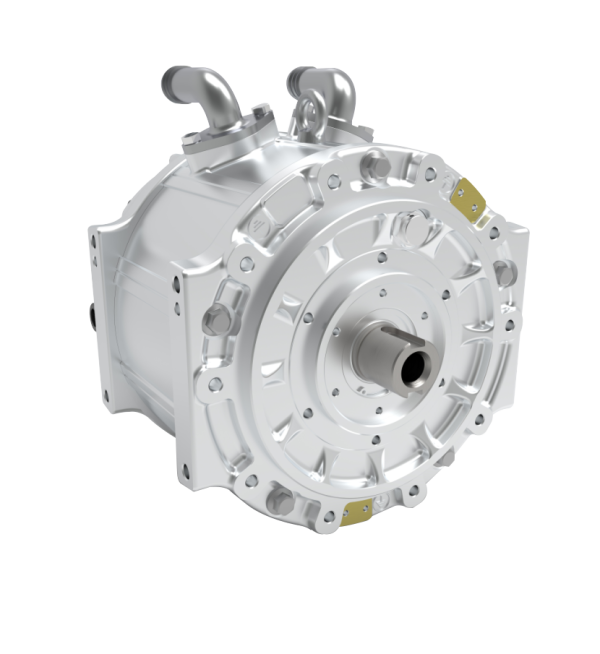
I want you to feel energized about this, not buried in jargon. An electric motor can be simple hardware — or it can be the single thing that sets your product’s fate. I’ve seen outcomes swing wildly based on motor selection: quieter runs, longer life, lower bills — or frequent failures and surprise repairs. I’ll share clear trade-offs, practical terms like power converters and torque density, and real-world control tactics such as PWM control so you can act confidently. Ready to dig in? Let’s move to the deeper problems that hide behind smooth-looking specs.
Why standard choices for electric motors often miss the mark
We usually pick motors by horsepower and price, and then hope for the best. That approach hides key flaws. First, standard tables ignore duty cycle and thermal limits. A motor rated for continuous torque can still overheat when your process has frequent starts, high peak torque, or poor cooling. Second, mismatch on rotor inertia and load inertia creates instability. When inertia isn’t matched, you get vibration, lost precision, and faster wear. I’ve been on lines where swapping a motor with better torque density cut cycle time by 12% — real savings, not just numbers on paper. Look, it’s simpler than you think: you must match the motor’s dynamic profile to the application’s rhythm.
Also — and this gets overlooked — the electrical side matters. Power converters and control topology shape your real performance. Cheap drives can induce high harmonics and raise motor temperature. Back-EMF behavior, efficiency maps across rpm, and PWM control quality are not optional details; they define how the motor behaves under load. We learned this the hard way when a machine with identical-rated motors behaved wildly different under the same task, purely because of drive quality and thermal management. Do you want repeatable uptime, or surprises? If you want uptime, start asking the right questions.
What’s the common blind spot?
Often it’s the gap between test conditions and real duty. Spec sheets show ideal points. Field use is messier. I prefer to see torque curves, thermal time constants, and efficiency at your actual duty points. That tells us whether a motor will thrive or just survive.
Looking ahead — new principles, clearer metrics, and practical choices
Now let’s shift to solutions. I like to think in principles: match dynamics, manage heat, and control cleanly. New approaches blend smarter control with better hardware. For example, sensor fusion in feedback loops reduces overshoot and smooths torque delivery. Brushless motor designs combined with higher-precision encoders and modern power electronics give strong torque at low speed and lower maintenance. Using a brushless motor with a well-tuned drive often solves the repeated-start issues we saw before — and the gains add up across an entire plant. — funny how that works, right?
In practice, I evaluate options by running a small set of tests: short-start duty, steady-load duration, and temperature rise under peak. These tests expose weak points fast. Case in point: a packaging line we upgraded to a brushless motor and better PWM control cut energy per cycle by nearly 15% and reduced maintenance calls by half. That gave the team breathing room to focus on throughput improvements, not fixes. I’d recommend this practical path: prototype, measure, then scale. (Yes, it costs a little more up front. But the payoff is predictable reliability and lower lifetime cost.)
What’s Next?
Here are three clear metrics I use to choose between motor solutions — use them to judge options for your machine:

1) Effective Efficiency at Duty Point — not peak efficiency, but the efficiency where your machine runs most of the time. 2) Torque Density vs. Inertia Match — can the motor provide required torque without hunting or overheating? 3) Drive and Thermal Integration Score — how well do the converter, cooling, and control work together under real cycles?
I’ve taken these measures into real projects and seen the results: fewer breakdowns, clearer performance, and happier operators. When you align motor specs to real use, you remove surprises. I’m confident these steps will help you pick a motor that’s economical and robust. For parts and proven motor modules, check the lineup from Santroll — I’ve worked with their gear and seen solid outcomes.