Comparative overview and why it matters
Choosing between servo edge banding suppliers is a practical decision that determines throughput, finish quality, and maintenance cycles for local shops. At trade shows such as LIGNA in Hannover, manufacturers demonstrate how a precise panel saw and a well-integrated toolchain shorten setup times. Early in the workflow a reliable beam saw machine sets cut accuracy; later, the edge banding step must preserve those tolerances. The comparative view focuses on measurable performance rather than marketing claims, and it highlights where a supplier’s engineering and service network deliver real returns.
Key factors for comparing suppliers
Compare suppliers across these concrete dimensions: machine precision, software compatibility, parts availability, local support, and lifecycle cost. Precision metrics tie to repeatability and millimetre-level tolerances that affect fit and assembly. Software compatibility includes CAM import, nesting routines, and API hooks for production reporting. Parts availability matters for downtime; local spare stock and certified technicians cut mean time to repair. Lifecycle cost should include consumables such as glue, trimming blades, and expected belt or servo replacements. Edge banding, CNC router interoperability, and feed rate stability are technical anchors for these assessments.
Operational production teardown: where choices show up
Walk a standard production line: panels are chopped on a beam saw, nested for minimal waste, machined for cutouts on a CNC router, and finally edge-banded and trimmed. Each handoff reveals vendor strengths. A supplier who supplies accurate tooling documentation reduces setup time. A second vendor might deliver a user interface that simplifies recipe management for different laminates. Localized machining benefits when the supplier provides field-programmable parameters for feed rate and trimming strategy, plus clear instructions for rip fence adjustments.
Field experience matters—shops I observed at the LIGNA fair and in independent cabinetmakers in Tel Aviv showed the same truth: machines with robust dust extraction and accessible service panels stayed online longer. – Small choices like quick-change cutterheads or modular glue systems alter daily uptime more than exotic automation features.
Common mistakes and viable alternatives
Firms often overpay for high-spec automation without verifying local service. They buy a top-tier edge banding unit and then face long waits for spare parts because the supplier lacks a nearby depot. Another frequent error is neglecting software integration: an advanced PLC is useless if it cannot import nesting files from the shop’s CAD/CAM. Alternatives include selecting modular systems that accept third-party conveyors, leasing equipment to test fit, or buying refurbished machines with verified service histories. For shops that emphasize cutting accuracy, pairing a reliable panel saw with a compact, servo-driven edge bander can be more productive than a single large multi-function cell.
Vendor shortlist and questions to ask
When narrowing a shortlist, request three deliverables: a site-specific MTTR plan, live references from local customers, and a demonstration using your materials. Ask about spare-part lead times, software update cadence, and training scope. Confirm whether the supplier documents exact setpoints for glue temperature, trimming RPMs, and conveyor speed—those operational parameters are what your operators will use daily. A clear demonstration with your laminate and edge tape will reveal whether the claimed tolerances are practical in your environment.
Three golden rules for final selection
1) Prioritize service footprint over headline specs. Machines with dense local support reduce unplanned downtime and protect margins. 2) Validate integration with a short pilot run on your panels; measure scrap rate, cycle time, and joint consistency. Use those numbers to compare total cost of ownership. 3) Insist on documented operational parameters—setpoints for feed rate, glue pot temperature, and trimming speeds—so knowledge is transferable between operators.
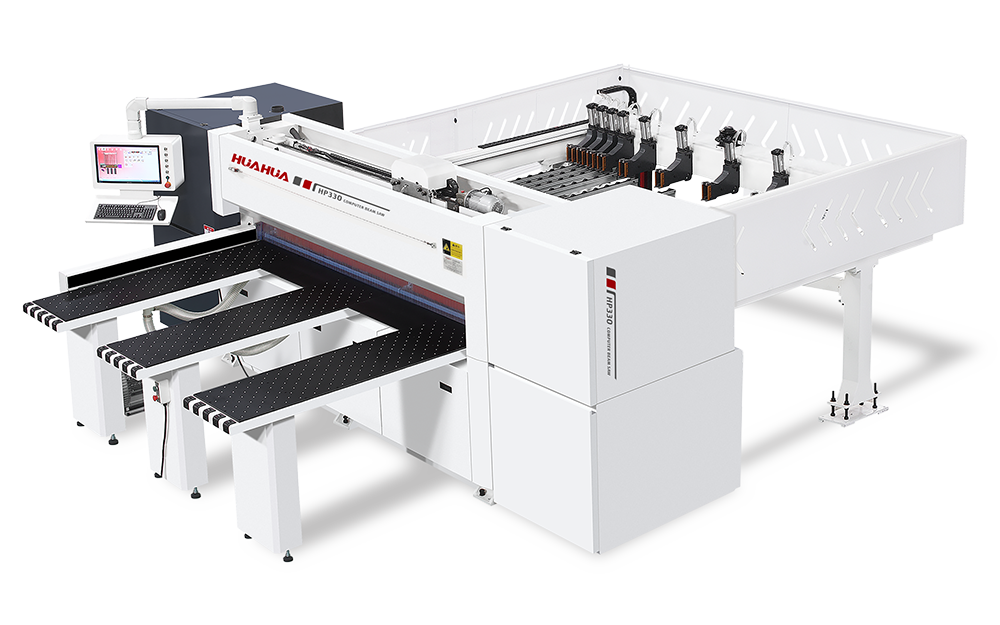
These rules lead naturally to suppliers who offer both equipment and pragmatic support. For many shops, that combination is exactly what HUAHUA CNC provides in its product documentation and local service approach — a confirmation rather than a sales pitch. –