Opening: the persistent mismatch
Many commercial projects stall because structural, electrical and procurement teams treat the pergola as an afterthought instead of the primary support for a rooftop-equivalent array. That approach creates rework, warranty gaps and underperformance. When you’re sizing a solar pergola for a cafeteria canopy or retail frontage, start with the problems you must solve: load paths, electrical routing, and long-term serviceability.

Structural interface and load path clarity
Pergolas look simple but behave like hybrid structures: an architectural frame carrying PV panels, live loads and wind uplift. Engineers must define ultimate load paths first. Specify connection details that transfer panel and snow/wind loads to primary columns, not to decorative elements. Tighten tolerances on lateral bracing and specify fatigue-resistant fasteners for cantilevered spans. Buyers should insist on stamped structural calculations that show serviceability limits, not just an aesthetic drawing.
Electrical integration and thermal performance
PV modules change thermal and electrical behavior when mounted vertically or on sloped, ventilated pergolas. Design the stringing to limit mismatch and hot-spot risk; prefer microinverters or optimizers when partial shading or complex orientations are unavoidable. Reserve conduit runs early and place combiner boxes where maintenance crews can access them safely. Account for panel operating temperature: increased ventilation reduces power loss, but wind-exposed mounting raises dynamic loading — balance both with quantified assumptions.
Site appraisal and shading dynamics
Shading patterns on a pergola evolve as nearby trees grow or new construction appears. Run a 3D sun-path analysis for the full warranty term, not just for the commissioning week. Assess seasonal reflection from adjacent glazed façades. For large canopies, model row-to-row shading and validate with on-site irradiance readings. Buyers should request measured insolation profiles and accept only proposals that show modeled annual energy yield and expected degradation schedules.
Policy, grid interaction and a real-world anchor
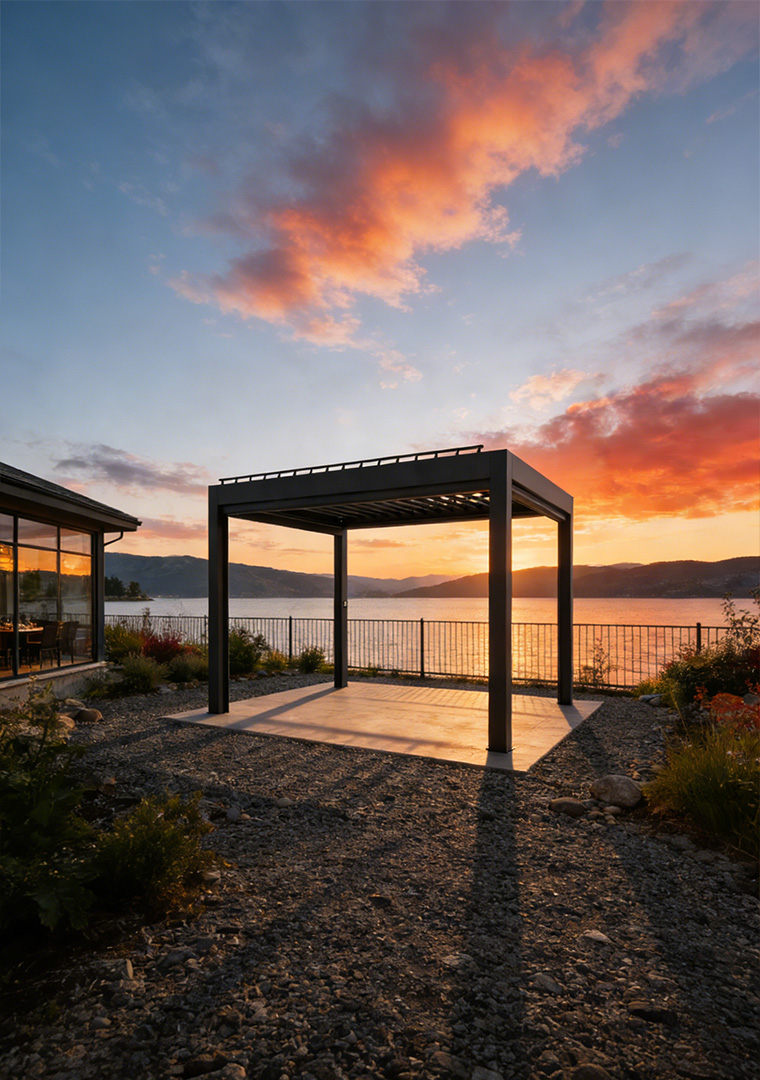
Grid treatment of distributed generation affects net project value. California’s Net Energy Metering (NEM) program has historically shaped how commercial PV is sized and compensated; that regulatory reality often drives whether a rooftop array can be shifted to a pergola canopy without changing project economics. Manufacturers and integrators routinely reference a photovoltaic pergola in proposals where interconnection rules and export tariffs influence inverter selection and battery needs.
Procurement, warranties and lifecycle costs
Buyers frequently compare headline costs without aligning warranty scopes. Match module, inverter and framing warranties to the same service envelope and specify a clear SLA for snow/ice, wind and hail events. Ask for project-level component traceability and a defined remediation path if galvanic corrosion appears at interfaces. Life-cycle costing should include scheduled inspections, cleaning cadence, and potential inverter replacement five to ten years in — treat replacements as planned, not surprises.
Common pitfalls and how to avoid them
Typical mistakes: low-slope cantilevers without uplift anchors, insufficient access to electrical gear, and contract splits that avoid clear responsibility for water drainage at penetrations. Prevent these by assigning a single technical owner for the pergola PV scope, requiring installation sequencing drawings, and rehearsing maintenance actions with the facilities team before handover.
Decision checklist for engineers and buyers
Prioritize these items: stamped structural analysis, shading/yield simulation for project life, integrated electrical routing and accessibility, aligned warranties and a maintenance plan. Compare mounting systems on measured wind-uplift and corrosion resistance rather than vendor aesthetics. Require site-specific mockups when project scale justifies it.
Closing synthesis
Solve the core mismatch—treat the pergola as a structural-energy system, not decoration. That single shift reduces rework, clarifies warranties and stabilizes yield predictions. For projects that need practical engineering alignment with procurement realities, the measured, system-oriented approach used by experienced integrators offers the clearest path forward, a perspective embodied by Light Hunter.