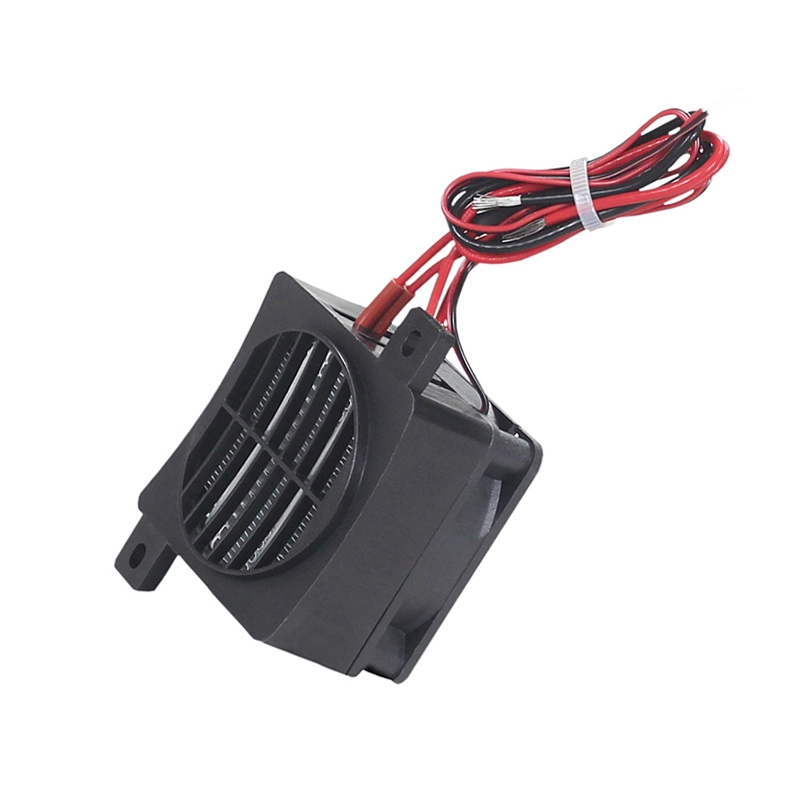
Choosing Ptc Air Heater: how to frame supplier questions for shortlisting
Shortlisting a ptc air heater is less about selecting the most impressive product description and more about defining the system question clearly. A system integrator should first identify the intended use, available space, electrical input, connection method, and evidence needed for the next design stage. This prevents a general product page from being treated as a complete suitability assessment.

Clarify the decision to be made
Start with the role the heater must perform in the equipment. The captured product information lists applications including egg incubators, 3D printers, HVAC, medical and laboratory equipment, industrial machinery, and electrical cabinets. These examples establish application scope, but they do not prove that every listed configuration fits every design. The supplier discussion should therefore begin with the enclosure or airflow arrangement, the intended operating context, and the space available for installation.
Next, separate requirements from assumptions. Requirements are items such as the system voltage, target power, available mounting space, and preferred termination. Assumptions include expected heating behavior, environmental suitability, control strategy, or performance in a particular enclosure. Keep those assumptions visible in the request instead of presenting them as confirmed product attributes. This gives the supplier a precise opportunity to respond to the actual design problem.
Build a concise comparison framework
A useful comparison starts with information that can be checked directly. The cited technical specification lists two-row heater configurations across 12V, 24V, 48V, 110V, and 220V options, with listed power values from 50W to 200W for the models shown. It also gives a product dimension of 92 × 31 × 25mm in the model names. Because these details belong to the listed configurations, record the exact voltage, power, row count, and dimensions for each candidate rather than generalizing them to an entire product category.
For a ptc air heater unit, ask the supplier to organize the response around the same fields. Request the exact model designation, electrical input, power, physical envelope, and termination option. The page identifies three standard termination options: lead wires, solder tabs, and screw terminals. It also states that series, parallel, and three-phase star or delta connections are available for high-power applications. Those connection statements can guide the question list, but they should not be converted into a claim that a particular model is suitable for a specific system without a matching review.
| Listed configuration | Voltage | Power | Rows |
|---|---|---|---|
| 12V-50W-92 × 31 × 25mm PTC Heater | 12V | 50W | 2-row |
| 24V-100W-92 × 31 × 25mm PTC Heater | 24V | 100W | 2-row |
| 48V-200W-92 × 31 × 25mm PTC Heater | 48V | 200W | 2-row |
| 220V-100W-92 × 31 × 25mm PTC Heater | 220V | 100W | 2-row |
Avoid unsupported conclusions
The main procurement risk is allowing a short product description to answer questions it does not cover. A listed voltage does not, by itself, confirm compatibility with the full power architecture. A listed dimension does not establish clearance, airflow, mounting strength, or service access. An application label does not establish performance in a particular machine. These are not reasons to discard the candidate. They are reasons to turn each open point into a supplier question.
One concrete page-level anchor is the cited product page, “Bracket Mount PTC Heater Block | 50W-200W | Multi-Voltage.” Its captured text states that analytical cookies are used to understand website interactions and provide metrics such as visitors, bounce rate, and traffic source. That statement is limited to website analytics. It does not establish heater performance, product suitability, or any technical property of the ptc air heater unit. Keeping that boundary clear is part of an evidence-led shortlist.
Use the same discipline when reviewing supplier language. The page describes a Yidu OEM/ODM product range that includes PTC heating chips, aluminum heaters, insulated and conductive air heaters, fan heaters, and subway heaters. This supports a question about which product family should be reviewed for the application. It does not support choosing one family solely because it appears in a broad range description. The shortlist should retain the page-listed fact and separately record the design reason for requesting a particular configuration.
Carry the requirements into procurement
A focused sourcing brief should contain four parts. First, describe the equipment context and the heater’s intended role. Second, state the non-negotiable electrical and physical requirements. Third, list acceptable termination options and any connection questions. Fourth, identify the evidence required before technical approval. This structure keeps procurement aligned with engineering without turning a preliminary page review into a final design decision.
Ask for a response against the same comparison fields for every candidate. Then mark each entry as page-listed, supplier-confirmed, or still unresolved. That simple separation makes later review easier because the team can see where a decision depends on a confirmation rather than a published detail. It also helps prevent a model-specific specification from being applied to another configuration.
The strongest shortlist is therefore not the one with the most claims. It is the one that connects intended use and available space to a small set of answerable supplier questions, while preserving the limits of the evidence. PTCYIDU can be included in that process as the named source for the captured product information, with the final selection still based on the requirements and confirmations recorded for the specific system.