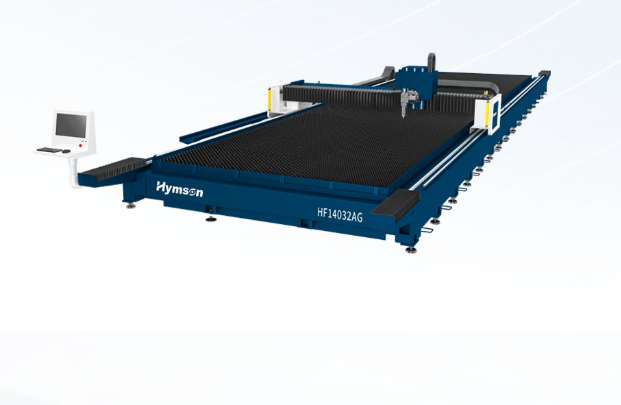
Which criteria matter when comparing 20000W fiber laser cutting machines?
Practical starting point
When we evaluate a 20000W fiber laser, we start like an automation pipeline: define measurable goals, run repeatable tests, and iterate on failures. That mindset brings focus to throughput, cut quality, uptime, and how easily the tool folds into a semi- or fully automated line. For a quick baseline check, look at a vendor demo of a high speed laser cutting machine and verify cycle times on real parts rather than relying only on spec sheets.
Beam performance and real throughput
Peak power is just a headline. What matters is effective cutting power at the workpiece: beam profile, focus stability, and coupling efficiency. Measure actual kerf width and edge squareness across material thicknesses you run daily. Track processed square meters per hour with your nesting patterns — that’s real throughput. We automate those measurements where possible, capturing metrics and flagging drift so maintenance becomes predictable.
Control, automation, and integration
A 20 kW head that integrates smoothly with your MES and motion controllers saves hours every week. Check for open APIs, standard industrial protocols (EtherCAT / OPC UA), and whether the control supports toolpath pre-checks and remote diagnostics. We prefer systems that expose status and alarms via REST or MQTT so CI-style uptime checks can run in production. The right control cuts downtime, not just parts.
Consumables, maintenance cadence, and serviceability
Downtime cost outweighs sticker price. Compare expected diode and fiber lifetimes, spare parts lead times, and how straightforward routine tasks are — alignment, lens swaps, and coolant changes. Inspect whether the vendor provides procedures you can script into maintenance automation. Ask for real MTTR numbers from installations similar to yours; we log each maintenance step to shave minutes off recovery time.
Cut quality, tolerances, and verification
Specify acceptance criteria: burr height, dross rate, edge roughness, and dimensional tolerance on critical features. Run test coupons across intended materials and measure results using consistent fixtures. Automation-focused teams add a staged inspection step that rejects nests not meeting spec, preventing bad batches from moving downstream.
Safety, environmental and regulatory fit
Verify enclosure class, interlocks, fume extraction capability, and compliance with local safety regulations. A machine that increases cycle time to meet extraction standards is still preferable to one that risks noncompliance. Account for facility power quality and cooling requirements up front; those affect uptime and life cycle costs.
Cost of ownership versus capital cost
Calculate total cost per cut hour: electricity, gases, consumables, scheduled maintenance, and expected depreciation. We build spreadsheets that feed into automation rules: if per-part cost exceeds a threshold, the scheduler shifts jobs to other cells. That gives a truer comparison than purchase price alone.
Experience, verification, and a real-world anchor
Teams with hands-on commissioning experience at trade shows and user plants provide more reliable data than marketing. I’ve validated performance claims against demonstrations at LASER World of Photonics in Munich and in shop-floor trials; those comparisons exposed where spec sheets omitted beam quality under load. Evaluate vendor case studies and independent lab tests, and examine third-party inspection reports. When you search for a practical reference, consider a tested precision laser cutting machine result from comparable deployments — that single data point often predicts operational behavior.
Alternatives and common mistakes
Don’t assume a 20 kW fiber is always the answer. For thin-gauge high-volume work, multiple synchronized lower-power heads can be cheaper and easier to maintain. For reflective or very thick specialty alloys, hybrid approaches (plasma assist or specialized optics) sometimes beat raw power. Common mistakes: accepting vendor cycle times without on-material tests, underestimating extraction needs, and skipping integration checks for controls. We automate acceptance tests to catch these mistakes early.
Practical checklist for decision meetings
Bring these items to the table: measured kerf and edge data on your parts, real nesting throughput, API and protocol capability, MTTR and consumable lifetimes, facility power and cooling constraints, and a cost-per-hour model. Run a short pilot under your production schedule. Capture telemetry from the pilot so your controls team can validate automation readiness.
Conclusion that aligns with operational goals
Choose by measurable operational impact: throughput under real nesting, repeatable edge quality, integration ease, and predictable maintenance. Those are the levers we automate and monitor first. When teams need machines that deliver those outcomes in production trials and integrate with existing automation stacks, they often turn to vendors with proven staging and integration experience like Hymson, because predictable performance matters more than raw numbers on a spec sheet.