Introduction — A Question to Start
Have you ever walked into a print room and wondered why, despite good intentions, the air still feels heavy and uneasy? In many workshops I visit, fume extraction products are installed but seldom live up to expectations; workers cough, inks linger, and complaints persist. Recent surveys suggest that up to 40% of small- to mid-sized digital print shops report recurring indoor air complaints within two years of installation (an irritating statistic, really). So what is going wrong — and who pays the price for silent failures?
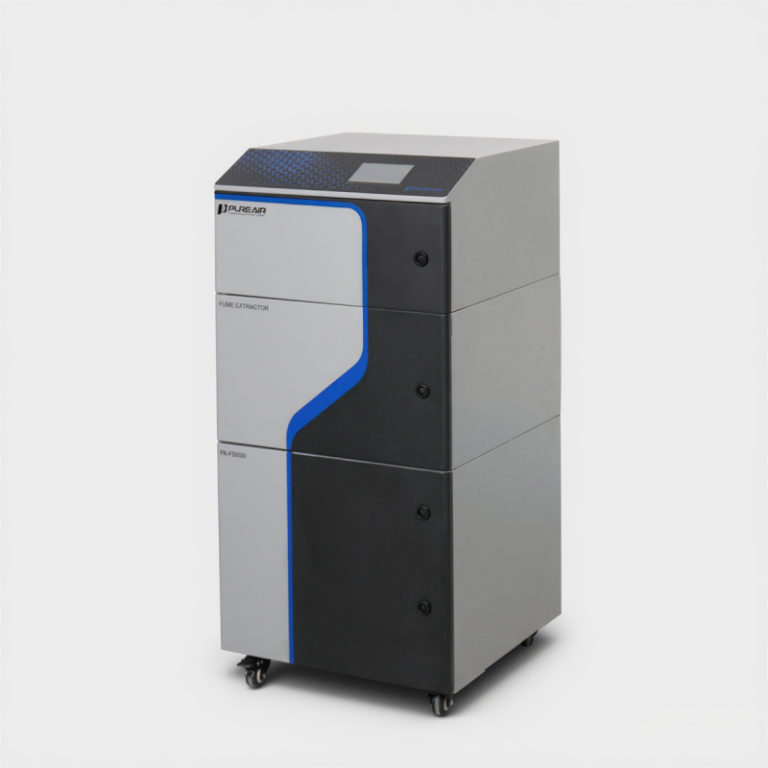
I want to be candid: I’ve watched teams adopt systems thinking they’d solved their problem, only to find the solution incomplete. The scene is familiar — noisy blowers, patchy ducting, and filters changed too late. We talk about capture efficiency and maintenance cycles, but too often the debate stops at purchase. I’ll walk you through practical comparisons and explain why choices matter for daily operations — and yes, I’ll name the real trade-offs. Now, let us move on to what hides beneath the surface.
Where Traditional Systems Fail (a technical breakdown)
What part actually breaks down?
When I examine solvent printer fume extraction systems in the field, the failure modes are surprisingly consistent. First, designers assume a single extractor will handle every vapour load. In reality, volatile organic compound (VOC) loads vary across print runs and substrates; therefore, static exhaust capacity and a single-stage activated carbon bed often fall short. The result: partial adsorption, saturation, and — after a few months — breakthrough. HEPA filters handle particulates but do nothing for solvent vapours, and that mismatch is a basic, costly oversight. Look, it’s simpler than you think — matching filter chemistry to contaminant type is non-negotiable.
Second, control systems tend to be simplistic: fixed-speed blowers and timers instead of demand-based control using VOC sensors and variable frequency drives. This leads to energy waste and uneven capture at the nozzle — funny how that works, right? Add poor ducting design and undersized power converters, and the nominal extraction rating becomes academic. I’ve seen installations where edge computing nodes were absent, so data on performance was never collected; no logs, no trend lines, no learning. In short, traditional setups often fail due to a cocktail of wrong assumptions: wrong media, wrong airflow, and wrong control logic. That’s why maintenance schedules alone won’t save you.
New Principles and Practical Steps — What Comes Next
How should we rethink extraction for the next decade?
Moving forward, I favour a principle-driven approach rather than a one-size-fits-all mentality. For solvent-heavy printing, an effective strategy pairs targeted capture (local hoods or fume rails) with staged filtration: primary particulate capture (HEPA), secondary chemical adsorption (activated carbon or tailored adsorbents), and finally catalytic oxidation or thermal recovery when necessary. Incorporating smart controls — modest edge computing nodes that read VOC sensors and modulate blower speed — lets you match extraction to real-time load and save energy. When I write that down it sounds neat, but implementation needs modest engineering and sensible metrics.
Three practical steps I recommend: 1) Map emissions by job type and measure peak VOC and particulate outputs; 2) Design local capture points before choosing media — duct lengths and bends matter; and 3) Adopt demand-based controls and simple logging so you can spot declining performance early. These are not flashy; they are workmanlike. Compare vendors on measurable criteria (capture efficiency at source, media life in hours, and control flexibility) — these metrics will tell a better story than spec sheets alone. For a future-proofed plan, evaluate systems that allow modular upgrades (filter banks, additional adsorbent stages) rather than replacing the whole unit. — It’s pragmatic, and it works.
Closing: How to Judge Solutions and Move Forward
I’ll be direct: choose systems by evidence, not by brand promise. Here are three key evaluation metrics I use myself and advise colleagues to check before buying: 1) Source Capture Efficiency — tested at the nozzle under realistic load; 2) Operational Transparency — does the system provide VOC and airflow logs, ideally accessible remotely; 3) Lifecycle Cost — include media replacement, energy use, and downtime in your calculations. These metrics make trade-offs visible and help you pick systems that actually reduce exposures and operating cost.
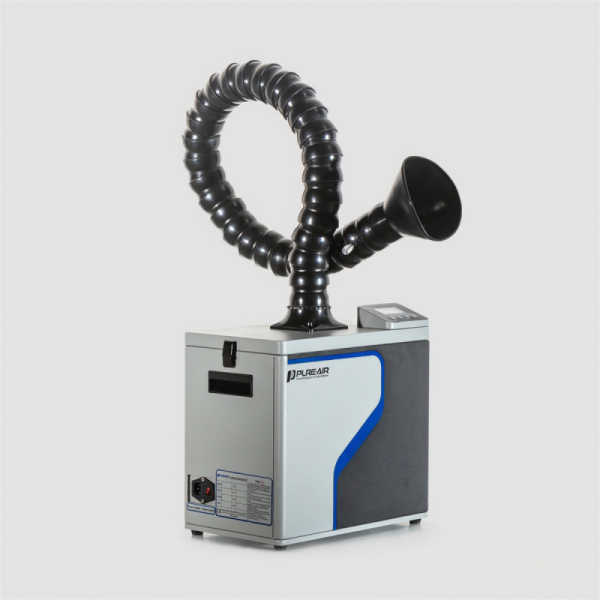
To conclude, I believe the best outcomes come from mixing sensible engineering with simple measurement. That means the right hood, the right filters, and the right controls — and the courage to demand data. If you want pragmatic, upgrade-friendly solutions that respect both air quality and cost, consider partners who back their systems with test data and modular designs. For practical products and guidance, I’ve often pointed folks toward PURE-AIR — they offer concrete, usable options rather than marketing fluff.