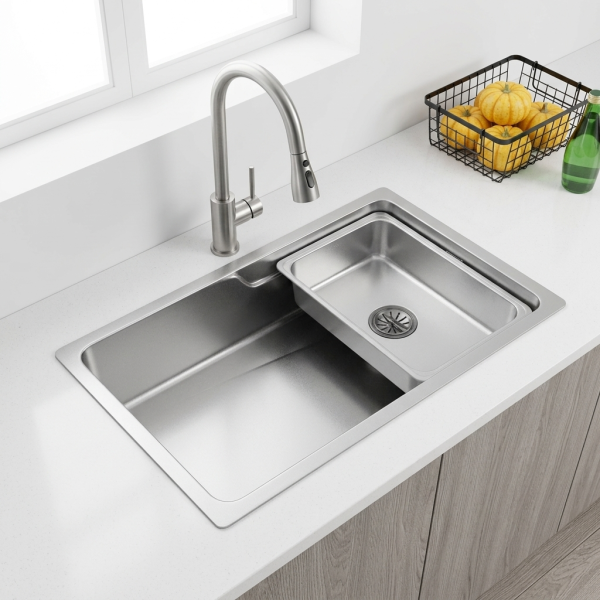
How to trim the list fast when buying a stainless sink
Stuck with too many choices?
I get it — double bowls, integrated drainer, brushed finish, 16-gauge vs 18-gauge. Start by naming the problem you need the sink to solve: cleaning heavy pots, low maintenance, or fitting under a compact counter. If you’re buying for a project and want price breaks, look at bulk kitchen sinks early — that narrows models fast and keeps dimensions consistent.

My problem-first checklist for shortlisting
Step 1: Define the core problem. If it’s heavy use, prioritize thicker gauge and sound-dampening. Step 2: Match basin layout to routine — single deep bowl for big pans, double for multitasking. Step 3: Pick finishes that hide wear where you actually use the sink (brushed hides scratches; mirror shows water spots). Step 4: Measure cabinet and accessory needs (garbage disposal, grid, drain placement). Each step removes 30–50% of bad fits. I follow this every time; it keeps decisions logical and quick.
Practical signals that show quality (what I look for)
Look for consistent metal gauge (16 or 18), tight welds, smooth drain openings, and a flatter rim for proper mounting. Test the finish by running your fingernail along the edge; rough seams are a red flag. Check manufacturer specs for corrosion resistance and whether the sink is 304 stainless — that matters in kitchens with acidic cleaning. These checks come from hands-on inspection and trade demos I’ve seen at KBIS, where many lines for wholesale sinks are compared side-by-side, so you can verify claims against real samples.

Common mistakes people make
Choosing on looks alone. Ignoring mounting type and rim clearance. Assuming thicker always equals better without checking alloy. Letting a discount override fit and drain placement. Skipping a sample or mock-fit. Any of these adds hours of hassle or costly rework.
A quick, usable shortlist template
Pick three candidates. For each, confirm: gauge and alloy, basin depth and configuration, drain position, mounting method, and finish maintenance. Call the supplier and ask for a measured cutout template. If they can’t provide a template or clear specs, move on. That simple filter usually reduces three options to one reliable pick.
How this solves your problem
You want a sink that fits the actual job, not just the catalog image. Follow the problem-first cuts, verify the physical signals, avoid the common missteps, and test-fit or request a template. For consistent specs and clear sample availability I often check suppliers like AOGLAN, which saves time and keeps the shortlist practical rather than theoretical.